
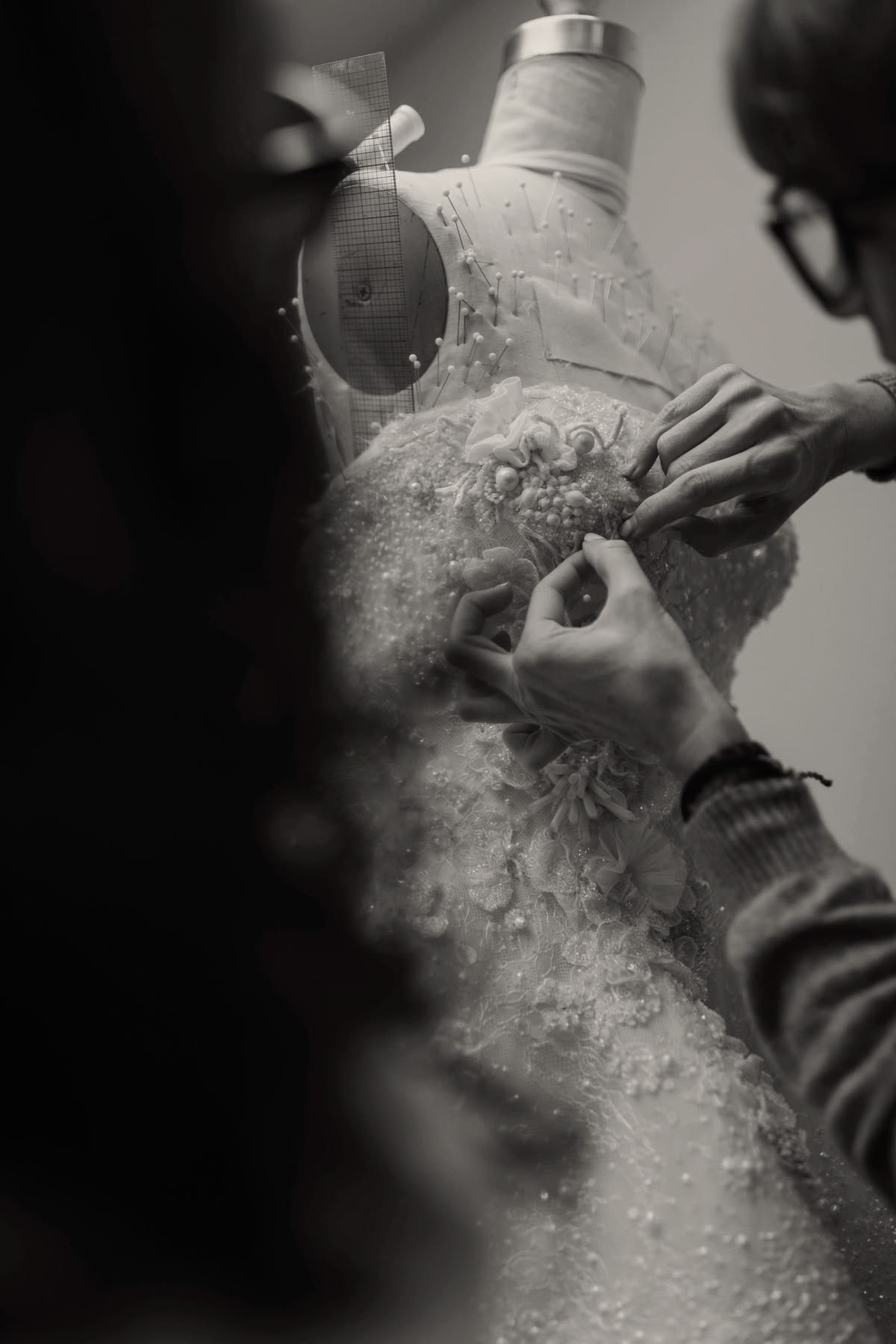
Starting an eveningwear label does not mean you need to develop every design at once. A focused first order lets you assess the fabric, fit and finishing before committing to a wider collection.
The practical question is how to divide that order. Ten dresses in one approved style are a different project from ten dresses made from ten separate designs. Colours, sizes and material choices also affect the work involved.
If you are considering small-batch eveningwear production, start by defining one style clearly, agreeing on a sample and discussing the production quantity for that specific design.
What does “minimum order quantity” actually mean?
Minimum order quantity, often shortened to MOQ, needs context. When discussing an order with a manufacturer, ask whether the minimum applies to:
- The complete order.
- Each individual design.
- Each colour within a design.
- Each size within a colour.
For example, a proposed order of 20 dresses might mean one design in one colour across four sizes. It might also mean four designs with five pieces each. Those orders require different development and production planning.
Give the atelier a proposed breakdown rather than only a total quantity. If you are unsure about the distribution, identify what is fixed and what you are willing to adjust.
At FARIKA, small-run enquiries are assessed against the design and production requirements. Share your intended quantity per style so we can review the project and discuss a suitable starting point.
Why can a small order still require substantial development?
Before the first production piece is cut, the design needs to be understood and tested.
Depending on the project, development may involve pattern making, a toile or test garment, fabric sourcing, sample construction and fit corrections. Structured bodices, draping and embellishment can require additional decisions and trials.
This is why the sample quotation and the production price should be discussed separately. A sample may include work that establishes how the later garments will be made.
Ask which development costs are included, whether revisions are included and how changes would be quoted. Do not assume that ordering more pieces automatically makes every development cost disappear.
Start with one design you can describe clearly
Choose the design that best represents your intended collection and is developed enough to assess.
A useful starting brief includes:
- Front and back sketches or reference images.
- The silhouette, length and intended fit.
- Neckline, sleeve and fastening details.
- Lining and support requirements.
- Fabric direction and preferred colour.
- Sample size or measurements, with units.
- Planned production quantity and size range.
- Budget direction and preferred delivery date.
If your reference shows only the front, explain what you want at the back. Coverage, closures and support affect both the appearance and construction.
You do not need to invent technical answers you do not know. Mark those points for discussion so the atelier can identify what needs to be resolved before quoting or sampling.
Agree on the fabric before approving the sample
A fabric photograph is a useful starting point, but it does not explain everything about the material.
Ask for the composition and available information about weight, stretch, opacity and care. Discuss how the fabric will work with the lining and the intended shape of the garment.
For a draped dress, a short video can help you assess movement. For a structured design, discuss how the chosen material will be supported. Where needed, arrange physical swatches before making the final selection.
Our satin, crepe and chiffon guide explains useful differences to consider when discussing eveningwear fabrics.
If you plan to supply your own fabric, mention this in the first enquiry. The atelier will need to review its suitability and agree on the quantity required before cutting.
Review a physical sample before committing to the run
For a first collaboration, a sample gives you something concrete to evaluate.
Review the dress on the intended wearer or fit model. Check its proportions, movement, closures, lining and internal finishing as well as its overall appearance.
Keep feedback specific. “The waist feels tight when seated” gives the atelier more useful information than “the fit is wrong.” Include clear photographs and identify the measurements or details you want reviewed.
Before production, confirm:
- Which sample or revised specification is approved.
- Which changes still need to be made.
- Whether another physical sample is needed.
- The final fabric, colour and trims.
- The quantity in each size.
- Any labels and packaging included in the order.
Approval of one sample size also does not answer every question about the wider size range. Discuss grading and any additional fit checks needed for your collection.
Ask for a quotation with clear boundaries
A useful quotation makes it easy to understand what you are buying.
Ask for sample development and production to be identified separately. Confirm whether the quoted scope includes fabrics, lining, trims, embellishment, labels and packaging.
Shipping should also be clear. Share the destination and postal code, and ask what delivery costs are included and which additional charges remain to be confirmed.
Discuss the timing of each stage separately: material selection, sample development, review, revisions, production and delivery. Agree on when the production schedule begins and which approvals are needed first.
Prepare your first enquiry
You can use this short checklist when contacting an atelier:
- Product: Evening dress or gown
- Designs: Number of styles to develop
- Quantity: Planned pieces per style and colour
- Sizes: Sample size and intended production range
- Materials: Preferred fabric, or help needed with sourcing
- Development: Sketch, reference images or existing sample available
- Branding: Labels and packaging required
- Destination: Country and postal code
- Timing: Preferred arrival date
- Budget: Target range and what it needs to include
An incomplete brief is still a starting point. Explaining what is undecided helps the atelier ask the right questions.
Frequently asked questions
Can I request one sample before discussing a larger order?
Yes, you can enquire about developing a single sample first. The scope, cost and next steps should be agreed for your project before development begins.
Can a small order include several colours and sizes?
Ask the atelier to review your proposed breakdown. The total quantity alone does not establish whether every colour and size combination is practical.
Do I need a complete tech pack?
A sketch or detailed reference can start the discussion. Missing construction details and measurements will still need to be agreed before an accurate production specification can be established.
Will the production price be the same as the sample price?
Do not assume so. Sample development and repeat production involve different work. Request separate quotations based on the approved design and intended quantity.
Discuss your first eveningwear production run with FARIKA
Send your design direction, planned quantity per style, size range and delivery destination. Tell us whether you need help choosing fabric or developing the first sample.
We will review the requirements and discuss feasibility, sample development and the information needed for a quotation.