
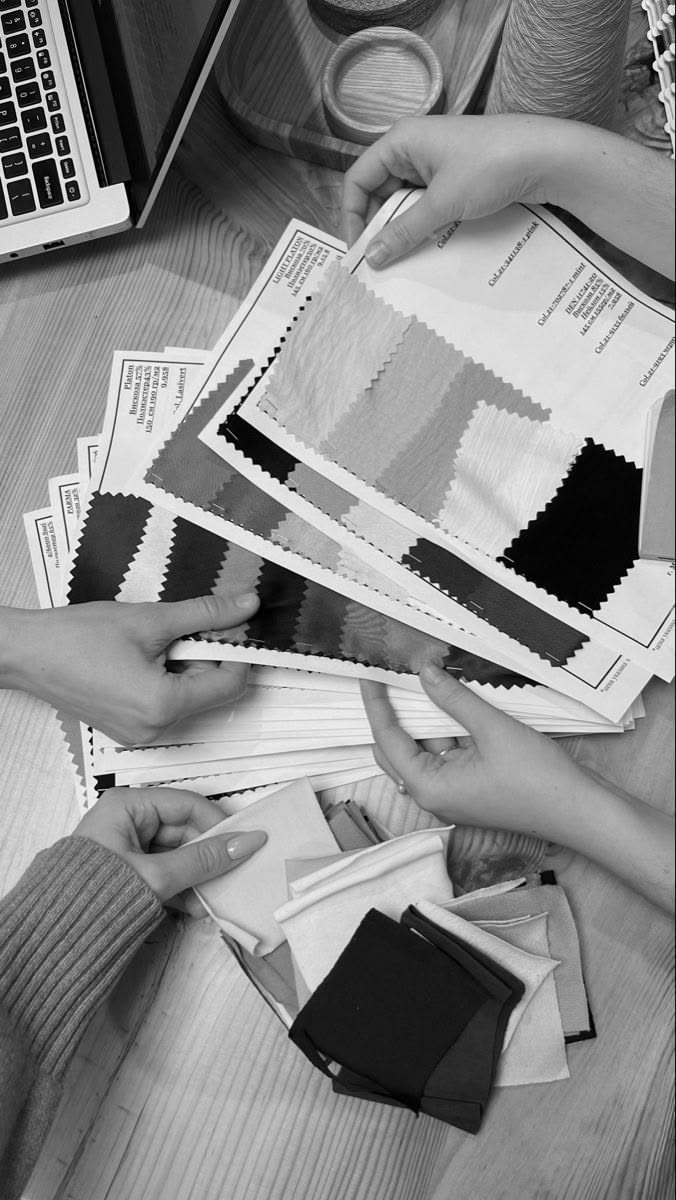
Start with the whole fabric, not just its name
Satin, crepe and chiffon describe fabric constructions or surface characteristics, not one fixed fibre content. A satin can be made from different fibres; a crepe can vary in weight and stretch. Ask for the composition and, if possible, handle a sample. The lining and the way the dress is cut also change how it feels on the body.
There is no single best fabric for every evening dress. Start with the effect you want: a smooth reflection of light, a more textured surface or light layers that move.
Satin: a smooth surface that catches light
Satin is useful when you want folds and draping to be visible through reflected light. The exact shine and weight vary. A heavier satin may hold a more defined shape, while a lighter version can fall closer to the body. Look at a sample both flat and gathered; the colour may appear different in the folds.
Check how the fabric behaves over the lining and seams. Do not assume that every satin is silk, stretchy or suitable for the same care method.
Crepe: texture and a more understated finish
Crepe fabrics have a textured surface, with versions ranging from fluid to more structured. They can suit a design where the cut is the main focus. Some have stretch and others do not, so ask rather than judging by the name.
During a fitting, check the waist, hips and armholes while moving. A restrained surface does not remove the need for a well-balanced pattern and suitable ease.
Chiffon: light layers and movement
Chiffon is light and often sheer, making lining and layering central to the finished dress. It can bring movement to skirts, sleeves or overlays. Check the colour with the intended lining underneath: the combined result may differ from the loose swatch.
Look closely at hems and the areas that might catch on jewellery. Ask the maker how the chosen construction supports the design and how to handle the garment.
A quick comparison before your appointment
| Fabric | Look for | Ask about |
|---|---|---|
| Satin | Smooth sheen and visible folds | Fibre content, weight, lining |
| Crepe | Texture and the line of the cut | Stretch, drape, ease |
| Chiffon | Light layers and movement | Opacity, lining, hem finish |
For warm-weather events, compare the whole construction rather than assuming one fabric name guarantees breathability. Fibre content, lining, number of layers and fit all matter. For care, follow the instructions supplied with the actual garment; do not apply one generic washing rule to every satin or chiffon dress.
Bring the fabric decision back to the dress
Choose two or three sample fabrics and view them beside the design. Ask which one supports the neckline, skirt volume and movement you want. Our evening dress selection guide helps connect those choices to the occasion. For a design developed around your preferences, talk to FARIKA about custom-made eveningwear.
Is satin always silk?
No. Satin is not a guarantee of silk content. Read the fibre composition.
Is chiffon always the coolest option?
Not necessarily. Consider its fibre content, lining and layers, as well as the conditions at the event.